Entry · Ref XTKOUBXC
Basement Waterproofing NJ Myths Every Homeowner Should Stop Believing
- Posted
- 2026-09-24
- Last amended
- 2026-09-24
- Account
- @fernandoidhc587
If you own a home in New Jersey long enough, you will hear the same basement advice repeated over and over. Some of it comes from neighbors who mean well. Some of it comes from contractors who only handle one narrow part of the problem. A lot of it comes from the simple fact that basement water issues are frustrating, expensive, and easy to misunderstand.
That matters because New Jersey homes deal with a particular mix of challenges. Older foundations are common. High water tables show up in many areas. Clay-heavy soils can hold water against the house. Coastal moisture is a factor in some counties, while freeze-thaw cycles and hard rain events stress foundations statewide. Put all that together, and bad assumptions become costly fast.
I have seen homeowners spend thousands on the wrong repair because they believed a clean-looking wall meant the basement was “basically dry,” or because they were told one coat of waterproof paint would solve seepage for good. I have also seen the reverse, where someone panicked over a little condensation and signed up for work they did not need. The hard part is not just fixing water. The hard part is diagnosing which water problem you actually have.
So let’s clear out the myths that keep causing confusion around Basement Waterproofing NJ homeowners hear every year.
Myth 1: A damp basement is normal, so it is not a real problem
This is one of the most expensive myths because it convinces people to wait. Yes, many basements in New Jersey get damp. No, that does not make it harmless.
A basement does not need standing water to have a moisture problem. Chronic dampness can support mold growth, rot wood framing, corrode metal, ruin stored belongings, and leave the entire house smelling musty. In finished basements, the damage usually hides behind drywall, under flooring, or inside insulation. By the time homeowners notice visible signs, the repair often extends beyond waterproofing into demolition and rebuilding.
There is also a health and comfort angle. Even when moisture stays below the level of obvious flooding, it can drive indoor humidity up through the floor system and affect upper living spaces. People often assume they need a new HVAC system when the real issue starts downstairs.
I remember one North Jersey homeowner who kept saying, “It’s just a little basement smell every summer.” The basement looked dry at first glance. No puddles, no dramatic leaks. But a moisture meter told a different story. The bottom edges of finished walls were holding moisture, and a closet had mold beginning behind stored boxes. What felt “normal for an old house” turned into a more involved cleanup because it had been ignored for several seasons.
Normal is not the same as acceptable. If the basement feels muggy, smells earthy, or shows white chalky residue on masonry, moisture is already active.
Myth 2: Waterproof paint is a permanent fix
Waterproofing paint has a place, but it is one of the most oversold products in the basement world. It is a surface treatment, not a complete waterproofing strategy.
If liquid water is pressing against a foundation wall from the outside, paint on the inside is trying to hold back pressure after the problem has already reached the structure. Sometimes it slows minor vapor transmission. Sometimes it improves appearance. Sometimes it buys a little time. What it does not do is relieve hydrostatic pressure in the soil or redirect exterior water away from the house.
This is where expectations go wrong. A homeowner sees a dry-looking wall after painting and believes the issue is resolved. Then the next heavy storm arrives, water finds the wall-floor joint instead, and the basement floods in a different place. The paint did not fail so much as the diagnosis did.
Real waterproofing starts with understanding the route water is taking. Is runoff collecting near the foundation? Is grading pitched toward the house? Are downspouts discharging too close? Is groundwater rising below the slab? Is there a crack that opens seasonally? Each of those calls for a different response, and none of them are fixed by a coating alone.
Myth 3: If you do not see water on the floor, the basement is dry
Visible water is only one form of basement moisture. In practice, many damaging basement problems arrive quietly.
Concrete is porous. Block foundations can hold moisture in their cores. Humid outdoor air can condense on cool basement surfaces in summer. Plumbing lines can sweat. Small wall cracks can seep only during wind-driven rain or only after several days of saturation. In those cases, the homeowner may never catch the problem in the act.
The clues are usually indirect. Peeling paint, efflorescence, bowed paneling, rust on shelving legs, darkened carpet tack strips, warped trim, and that persistent stale odor all tell a story. A dehumidifier that runs constantly is another clue. So is a basement where cardboard boxes soften at the bottom even though nobody has ever witnessed an actual leak.
A proper inspection usually includes looking beyond the obvious floor area. Window wells, sill plates, joist ends, base of support columns, mechanical room corners, and the backside of finished walls often reveal what open floor space does not. Homeowners who wait for “real water” are often waiting until the damage is already substantial.
Myth 4: Gutters and grading have nothing to do with basement leaks
This one surprises people because the basement feels far removed from the roofline and yard slope. In reality, roof runoff and surface drainage are often the first things to evaluate.
A house can shed a tremendous amount of water during a storm. If gutters overflow, if downspouts discharge right beside the foundation, or if the soil around the house slopes inward, that water loads the perimeter fast. Once the ground around the foundation becomes saturated, pressure builds and water seeks entry through joints, cracks, penetrations, and porous materials.
I have seen basements stay dry for years after nothing more dramatic than extending downspouts and correcting grading near entry corners. I have also seen interior systems installed in homes that still dumped roof water at the base of the wall, which meant the waterproofing system had to work harder than necessary from day one.
That does not mean exterior drainage fixes everything. In some New Jersey neighborhoods, the water table itself is the issue, especially during wet seasons. But dismissing gutters and grading is a mistake. A good contractor looks at the whole water-management picture, not only what happens inside.
When homeowners ask where to start, these are the first items worth checking:
- Are gutters clogged, undersized, or spilling during heavy rain?
- Do downspouts discharge several feet away from the foundation?
- Does the soil around the house slope away instead of back toward the walls?
- Are window wells draining properly and staying clear of debris?
- Do patios, walkways, or driveway edges trap water against the house?
These are not glamorous fixes, but they are often the lowest-cost way to reduce basement moisture pressure.
Myth 5: Every crack means foundation failure
Cracks make people nervous, and sometimes they should. But not every crack is a structural emergency.
Concrete and masonry crack for many reasons. Some are cosmetic shrinkage cracks. Some come from settlement that has long since stabilized. Some are active and need close evaluation. Some are direct water-entry points but not signs of major structural danger. Others, especially horizontal cracks in block walls or step cracks paired with inward movement, can indicate more serious loads and should be taken seriously.
The problem with blanket advice is that it ignores context. The crack’s width, direction, location, movement over time, and surrounding signs all matter. A hairline vertical crack in poured concrete is a different animal than a widening horizontal crack in a block wall with bowing. Likewise, a crack that only weeps during extreme storms may need sealing and water management, while a crack linked to wall displacement may require structural reinforcement.
Good assessment is about pattern recognition. Are multiple cracks appearing in one zone? Do doors above the basement stick? Is there floor slope near the affected wall? Is the wall out of plumb? Is efflorescence concentrated around one crack or spread across an entire wall plane? Those details matter far more than the mere existence of a crack.
Homeowners get into trouble in two ways here. Some ignore dangerous signs because they have been told “all foundations crack.” Others overreact to minor cracking and approve expensive structural work without enough evidence. The right move is measured evaluation, not panic and not denial.
Myth 6: A sump pump means the basement is waterproofed
A sump pump is a tool, not a complete strategy.
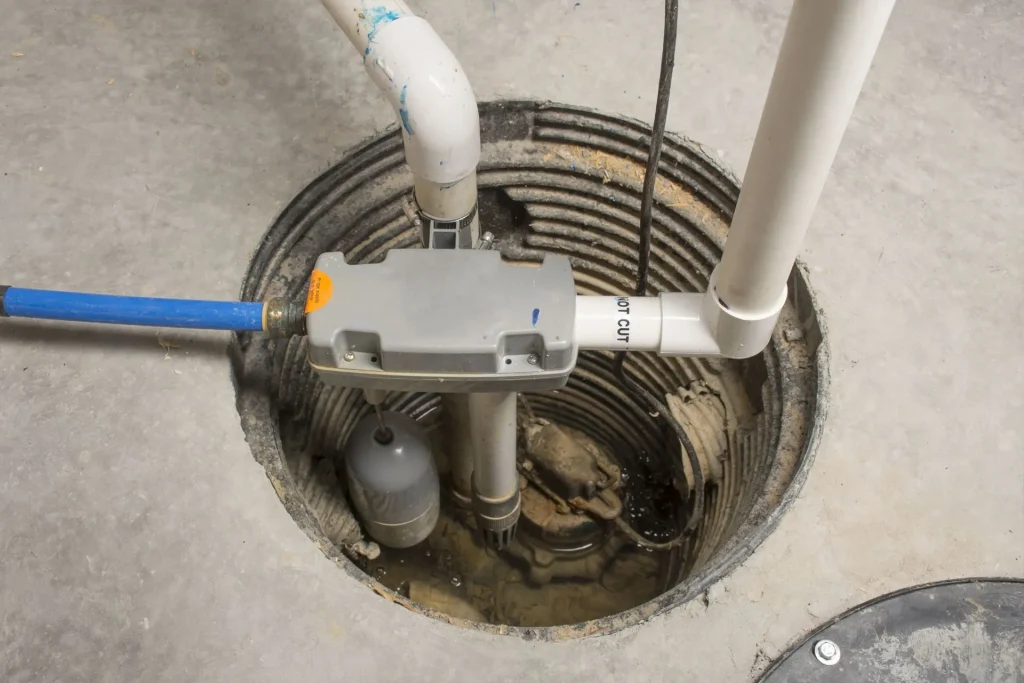
A well-designed sump system can be essential, especially in homes where groundwater rises beneath the slab or around the footing. It can collect and discharge water efficiently and prevent major flooding. But a sump pump by itself does not seal wall cracks, correct grading, lower indoor humidity, or stop exterior runoff from saturating the foundation perimeter.
It also depends on maintenance and power. Pumps fail. Switches stick. Discharge lines clog or freeze. Power outages often happen during the same storms that create the highest water load. That is why battery backups or water-powered backups are not upsells in many cases, they are practical insurance.
One of the more frustrating service calls is the homeowner who says, “We already waterproofed the basement, we have a sump pump,” only to discover there was never any interior drainage channel, no backup system, and no exterior water control improvements. The pump was treating one symptom while other pathways stayed open.
If a basement relies on a sump, the discharge location matters too. I have seen discharge lines terminate too close to the home, sending water right back into the same soil zone. The system technically ran, but the site plan worked against it.
Myth 7: Waterproofing is only for homes that flood badly
This idea keeps many people in the waiting room until damage gets expensive.
Basement waterproofing is not just about dramatic flooding with inches of water across the slab. It also addresses chronic seepage, seasonal dampness, hidden wall moisture, and high humidity conditions that degrade the home over time. Many of the most worthwhile projects are preventive or moderate in scope, not emergency-level rescues.
That is especially true if you use the basement for living space, storage, or mechanical equipment. Furnaces, water heaters, laundry appliances, electrical panels, and finished materials all benefit from a drier environment. Even if the basement is unfinished, moisture can still affect insulation, framing, and air quality throughout the house.
A homeowner finishing a basement without first resolving moisture is making a gamble. It may look fine for a year or two. Then one wet season reveals the weak points, and suddenly new flooring, trim, drywall, and furniture are at risk. Waterproofing before finishing is usually cheaper than remodeling twice.
The financial logic is pretty simple. The cost of early intervention often looks high until you compare it with mold remediation, flooring replacement, drywall removal, damaged stored property, and the hit a damp basement can put on resale confidence. Buyers notice basement issues quickly. So do home inspectors.
Myth 8: Interior systems are always inferior to exterior systems
This is one of the most common oversimplifications in Basement Waterproofing NJ discussions. People are often told there is only one “real” solution, either interior or exterior, depending on who is selling it. That is rarely how experienced diagnosis works.
Exterior waterproofing can be excellent when the situation calls for it. Excavating to apply a membrane, improve drainage board, and protect the wall from outside moisture can address the problem at the source. But exterior work is disruptive, often more expensive, and not always practical. Tight lot lines, porches, decks, mature landscaping, attached structures, and depth of excavation can all complicate the job.
Interior drainage systems also have a legitimate role. In many homes, especially where groundwater pressure is the issue, an interior perimeter drain and sump system manages water effectively and with less disruption. It does not stop water from reaching the outside of the wall, but it can control where that water goes and prevent it from entering the usable basement space.
The right choice depends on the failure mechanism, budget, access, and the homeowner’s goals. Sometimes the best answer is a hybrid approach. Correct the exterior drainage issues you can reasonably fix, seal specific entry points where appropriate, control interior collection with drainage and pumping if needed, and manage humidity with dehumidification.
What matters is not ideological purity. What matters is whether the chosen system matches the actual problem.
Myth 9: Dehumidifiers are a sign the waterproofing failed
A dry basement and a low-humidity basement are related, but they are not identical.
Even after good waterproofing work, many New Jersey basements still benefit from dehumidification during humid months. Moisture can enter the air through normal infiltration, cool concrete surfaces, laundry activity, and seasonal conditions that have little to do with active leaks. A dehumidifier may still be part of the complete solution.
What it should not be is the only solution to an active water-entry problem. If water is seeping through walls or the slab, a dehumidifier is trying to manage the symptom after the fact. It may reduce odor and improve comfort, but it will not relieve the cause.
Think of it this way. Waterproofing controls liquid water pathways. Dehumidification controls airborne moisture. They often work together. There is no contradiction in having both.
Myth 10: The cheapest estimate is the smart choice
Price matters. It should. Basement work can be a major expense, and homeowners are right to compare bids carefully. But the cheapest number https://stephenjbcs625.wpsuo.com/basement-waterproofing-nj-myths-every-homeowner-should-stop-believing on paper can hide a narrow scope, a poor diagnosis, low-quality components, or missing work that becomes your problem later.
A bid that looks lower may exclude gutter corrections, discharge extensions, crack repair, wall preparation, permit considerations, backup power, or cleanup. Some estimates focus on the visible symptom and ignore the water source. Others recommend a full-system installation when targeted repairs would have been enough. This is why comparing estimates line by line matters more than comparing totals.
The best contractors usually ask better questions. They want to know when the problem occurs, whether it is seasonal, what past repairs have been tried, whether the basement is finished, how the lot drains, and whether there is a sump, backup, or history of power loss. They inspect inside and outside. They explain trade-offs instead of pretending there is one magic fix.
Before you hire anyone, it helps to get clear answers to a few practical questions:
- What specific water source or sources are you addressing?
- Why is this system appropriate for this house and this site?
- What maintenance will the system require over time?
- What is excluded from the estimate?
- How will discharge water be handled away from the home?
A useful estimate is not just a price. It is an argument backed by observation.
What smart homeowners do instead
The most effective homeowners are not the ones who know every technical term. They are the ones who stay curious, document what they see, and avoid one-size-fits-all advice.
If you notice moisture, pay attention to timing. Does it happen during prolonged rain, during sudden cloudbursts, during spring thaw, or during humid weather without rain? Timing helps separate groundwater, runoff, condensation, and plumbing issues. Take photos. Note locations. Check whether the problem returns in the same spot. Look outside during a storm if it is safe to do so. You can learn a surprising amount by watching where roof water spills and where puddles collect.
Then bring in someone who treats diagnosis seriously. Good waterproofing is less about dramatic product claims and more about understanding how water behaves on your property.
That is the real thread running through every myth above. Basements do not leak for one universal reason, and they do not stay dry because of one universal product. Homes in New Jersey vary too much in age, soil conditions, construction style, and drainage patterns for simplistic answers.
The sooner homeowners let go of the myths, the sooner they can make decisions that actually protect the house. And in basement work, accurate decisions are what save the most money.
ARD Waterproofing
Address: 98 Smull Ave, West Caldwell, NJ 07006
Phone number: +12016465936
FAQ About Basement Waterproofing NJ
What is the best waterproofing method for a basement?
The best overall approach to waterproofing a basement is a combined exterior and interior system that stops water at the foundation wall and safely manages any moisture that gets through.
What is the average cost to waterproof a basement?
The average cost to waterproof a basement ranges from $2,500 to $15,000, with most homeowners paying around $5,200 for a complete project.
Can a basement be waterproofed from the inside?
Yes, a basement can be waterproofed from the inside, and it is often the most affordable and least disruptive method.